Why are the enquiries you get the wrong ones?
Usually because the marketing says you do everything, so everybody asks. A website that lists all types of building work, from extensions to commercial projects, attracts the extension. It is the specific pages that bring the specific buyer: commercial brickwork for housebuilders, groundworks for developers, electrical fit-out for main contractors. Say what you want more of, in the buyer’s words, and the wrong enquiries fall away on their own.
The same applies to area. A firm in Huddersfield that works across Yorkshire should say so, with the towns and the developments named, or the site reads as a local jobbing outfit.
Which searches bring in the better jobs?
The ones with a trade, a sector and a place in them. Commercial brickwork contractor Yorkshire, groundworks contractor Huddersfield, industrial electrical contractor West Yorkshire: each of those is typed by a buyer with a project, and each needs a page of its own to rank for it. A general services page ranks for none of them.
Bond Brickwork is the example we point to. The website and the search work have been built around the commercial brickwork searches that matter since 2018, with evidence from live developments photographed from the drone, and the firm sits at the top of Google for those searches and is recommended by AI search when people ask.
What proof does a main contractor look for?
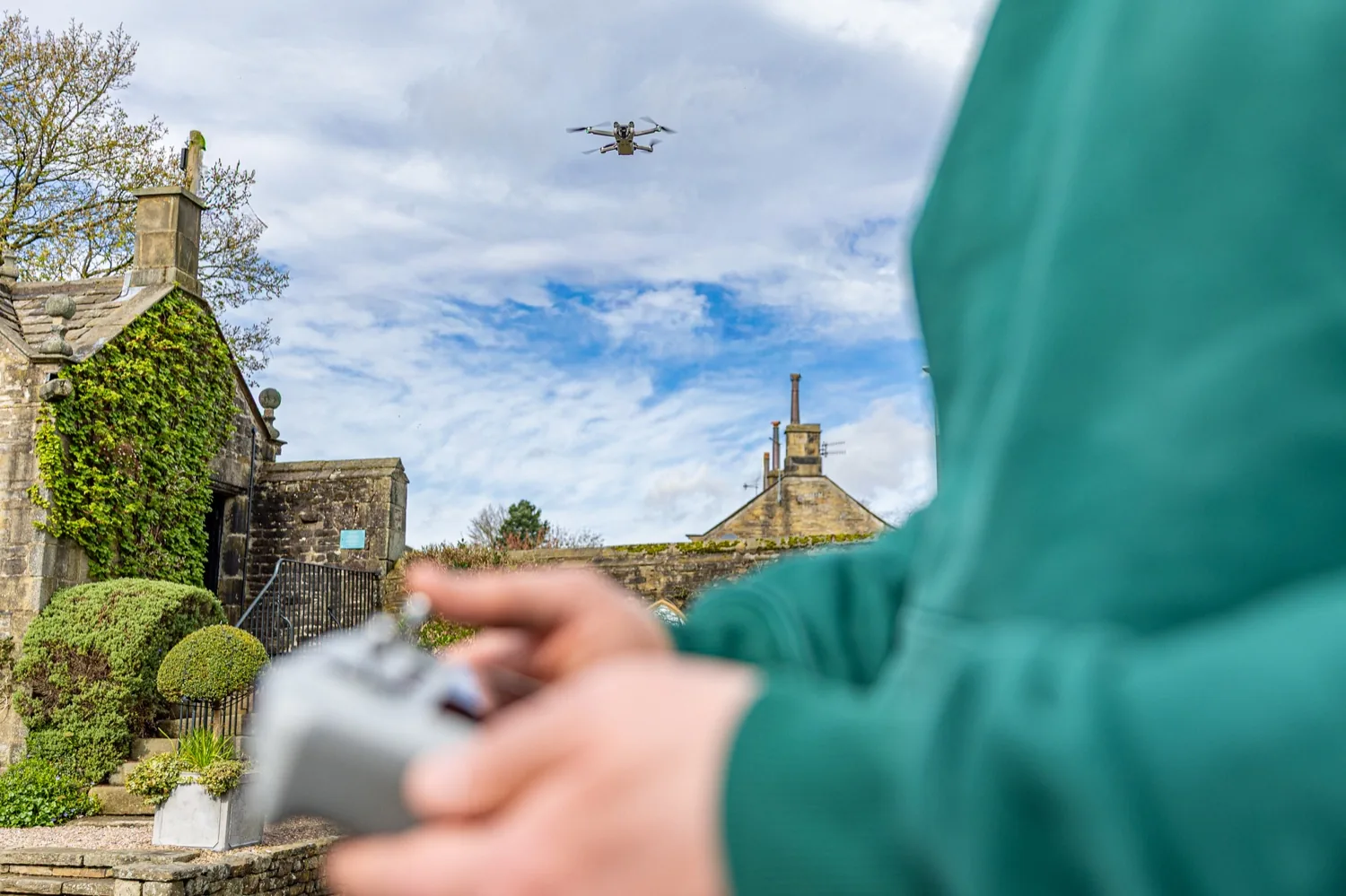
Scale, recent sites, the right accreditations and the people they will be dealing with. A buyer placing a subcontract package is managing risk, so they want to see developments like theirs, photographed while the work was happening, with the client and the location named. Drone footage does this better than anything else in construction, because it shows the whole site and the standard of the work in one shot.
We fly the drone ourselves. Bond Brickwork at Swarcliffe in Leeds and Jack Lunn at Flower Meadows in Bradford were both filmed from the air, and Standeven Flooring’s fit-out of the M&S Food store in Pudsey was photographed and filmed as it happened. That footage is the evidence buyers look for, and it works on the website, in a tender and on LinkedIn.
Does LinkedIn work for construction firms?
Yes, for firms selling to main contractors, developers and commercial clients, because that is where those people are. Jack Lunn, a long-established Leeds construction and property business, has seen its LinkedIn grow on the back of drone and video content from live sites, with a strategy behind what gets posted and when. The marketing now looks as established as the family name behind it.
For a firm selling to homeowners, LinkedIn matters less and Facebook and Google reviews matter more. Either way, social media shows the work to people who are not searching yet, so it sits behind the search work and never replaces it.
How should a construction website handle the enquiry itself?
By asking the questions an estimator would ask. Type of project, location, rough programme, whether the enquirer is a main contractor, a developer or a private client. That sorts the serious enquiry from the tyre-kicker before anybody spends an hour on a call, and it gives you the information to price properly. Put a direct email address next to it, because a quantity surveyor with a tender pack wants to attach it, and keep the form near the proof on every page.
Then track it. Every enquiry should be traceable to the page and the search that produced it, so you know which pages are winning the work you want and which are only winning clicks.
What would Halizona do first for a construction firm in Huddersfield?
Work out which types of project and which buyers you want more of, then build the pages around the searches those buyers use. Next comes a site visit with the camera and the drone, so the pages carry real evidence from the first day. LinkedIn follows once there is something worth showing, and the tracking runs underneath all of it. That is the order Bond Brickwork has run on for years, and it is what we mean by joined-up.